Persian gold. Where the name begins.
The name Silux carries two words inside it: Silk, for the Silk Road trade routes that carried Persian gold across continents for three thousand years, and Lux, for the quality that made Persian court jewellery the reference point for luxury across the ancient world. The Silk Road was not romantic mythology. It was the mechanism by which Persian craftsmen, working in gold, supplied every court from Byzantium to Tang China. Hammered surfaces, coloured stones in elevated settings, the interplay of polished and raw: these are not design trends. They are an inheritance.
Silux London draws from that inheritance directly. Founder Hamed Arab grew up in a culture that does not separate art from daily life. The piece you wear to dinner carries the same weight as the poem recited at the table. This is the sensibility behind every Silux commission.
From Studio Saina to Silux London.
Hamed founded Studio Saina in 2020, building a practice around bespoke design and craft training. The studio grew into a platform for serious jewellery design education, including authorised training in Rhino 3D, the industry-standard modelling software used by the world’s leading jewellery houses. The pivot to Silux London formalised the brand identity around a single, clear design language: 18ct yellow gold, hammered, sculptural, anchored by a single coloured stone. The Hammered Gold Collection, launched 2026, is the first public expression of that language.
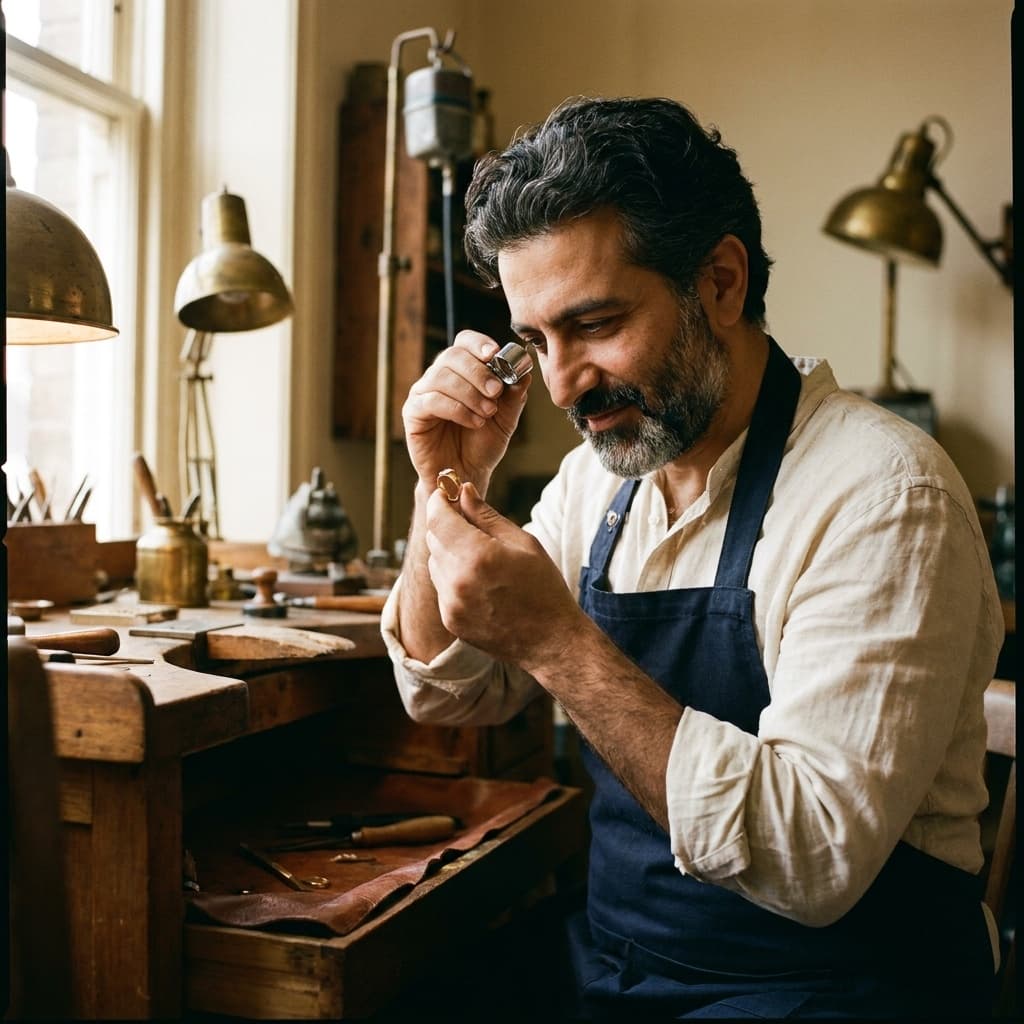
Hamed Arab, founder.
Hamed trained at Birmingham City University. He has worked in British fine jewellery manufacturing, studied goldsmithing technique across traditions, and built a practice that bridges the analogue craft and the digital precision of CAD. He is the author of “The CaD/Cam Jeweller” (cadcamjeweller.com), a technical reference for jewellery designers working across Rhino, MatrixGold, and Fusion 360. He is a Rhino Authorized Trainer, one of a small number of designers worldwide holding this credential.
He has received recognition from the British Fashion Council and multiple Design and Craftsmanship Awards. He does not mention these often. The work is the argument.
Birmingham’s Jewellery Quarter.
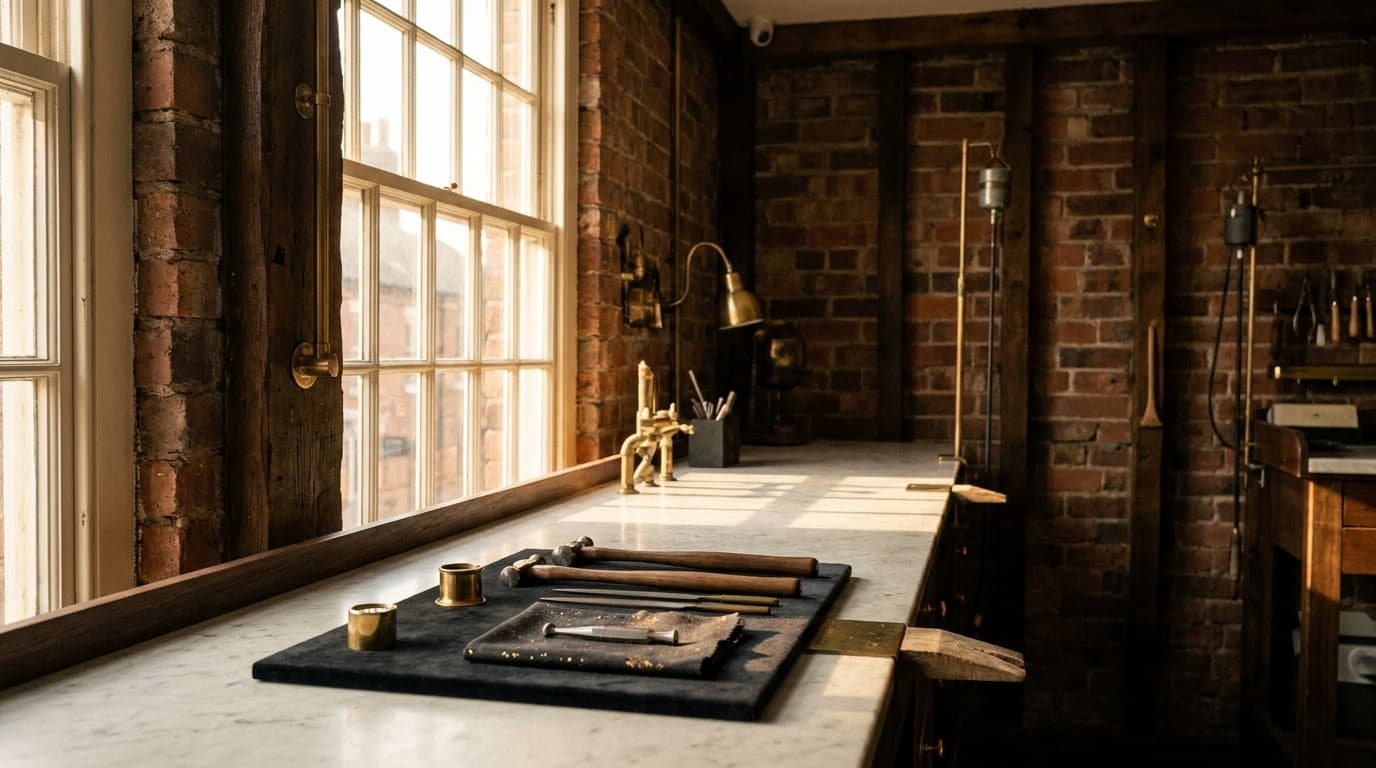
Silux London works from Birmingham’s Jewellery Quarter, the most concentrated centre of jewellery manufacturing in the United Kingdom. The Quarter has produced British-made jewellery for over 200 years. The Birmingham Assay Office, established in 1773, assays and hallmarks precious metal items here: the anchor mark on a Silux piece confirms that the gold is exactly what it is stated to be, tested and certified by an independent institution with 250 years of history.
In 2025 the World Crafts Council awarded Birmingham’s Jewellery Quarter World Craft City status, joining Kyoto, Jaipur, and a small number of cities globally that the Council recognises as living centres of craft excellence. Pruden and Smith, Victoria James, and the wider Made in the Jewellery Quarter community have built their provenance story here for years. Silux London is part of that community.
Note on hallmarking: the Birmingham Assay Office hallmarks precious metal items from across the United Kingdom and internationally. The assay anchor mark confirms metal content and quality. It does not in itself confirm Birmingham manufacture. The Silux provenance claim rests on the work itself: designed and made in Birmingham’s Jewellery Quarter.
The philosophy.
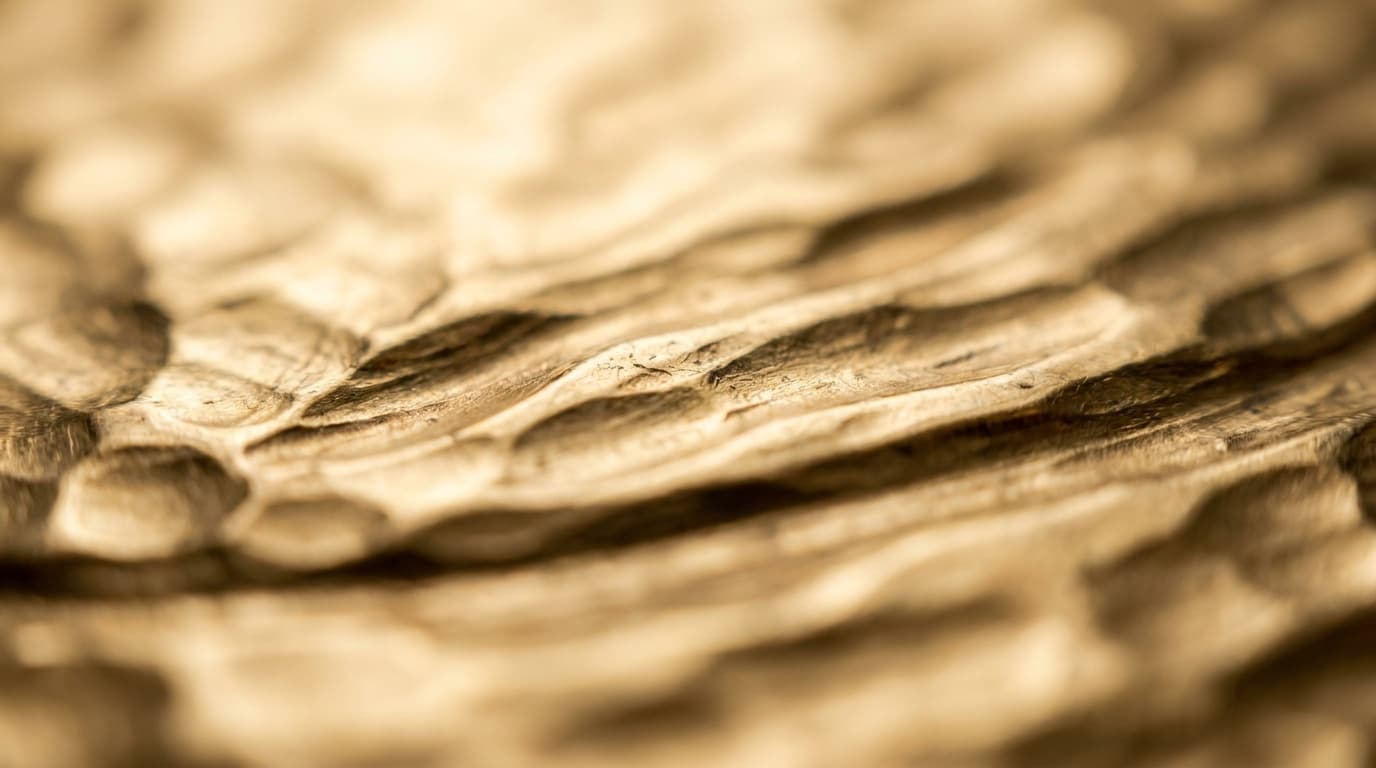
The design rules at Silux are few and firm. Solid, continuous volumes. No open filigree. No surface engraving as a substitute for form. The beauty must come from shape and mass, not from pattern applied on top. The hammered surface is not decoration: it is the record of the making. Each facet of a hammered band shows the strike of a tool, the decision of a hand. This is what “handcrafted” means at Silux. Not a marketing word. A description of what happened.
Reference houses: Van Cleef and Arpels. Boucheron. Cartier. That level of finish and restraint, interpreted through a Persian sensibility. The Silux buyer is not buying a copy. They are buying a distinct point of view.